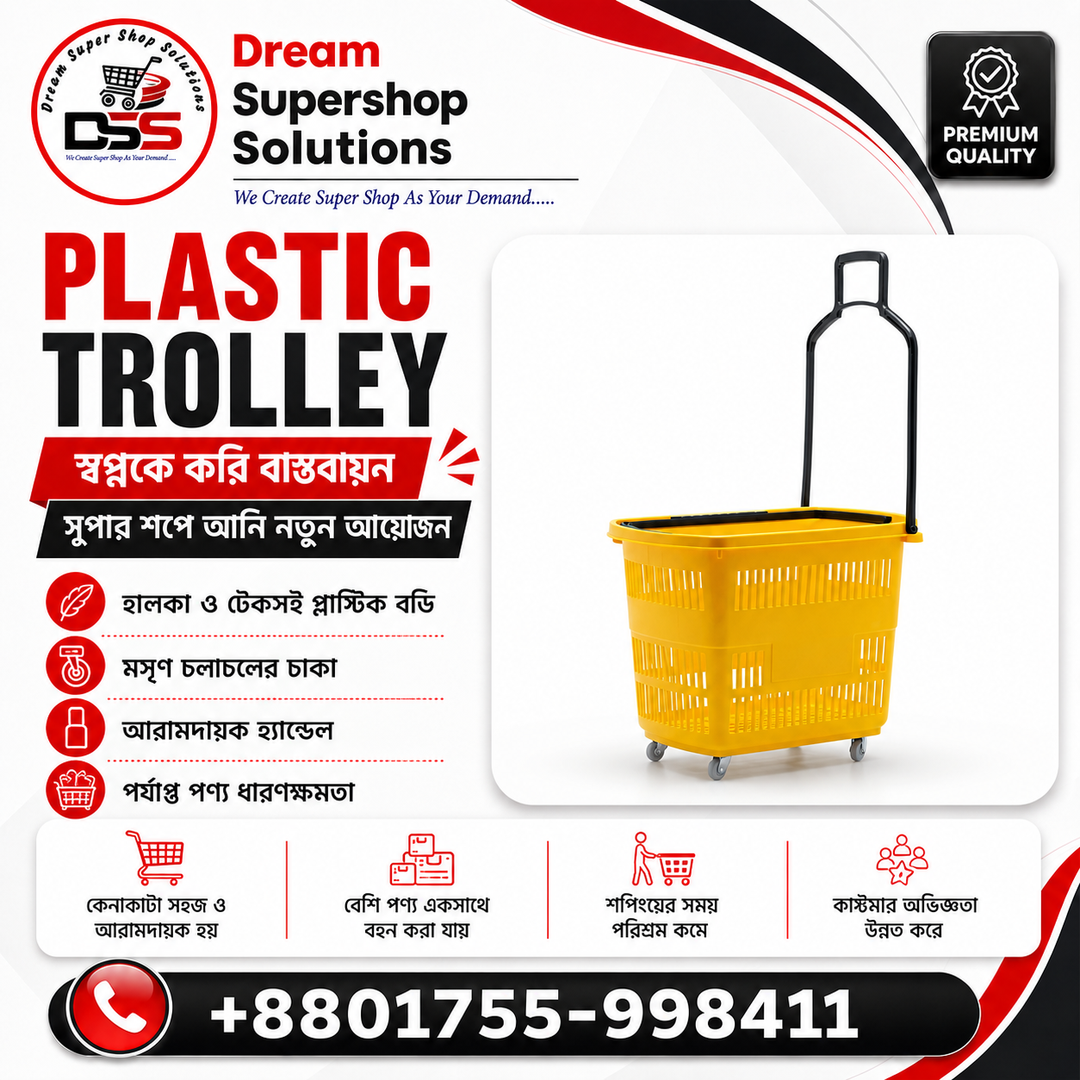
Supershop Shopping Trolley Price in Bangladesh
Category:
Super Shop Equipment , Display Rack , Trolley & Shopping Baskets , Cash Counter
Total Price : BDT7,245.00
Supershop Shopping Trolley Price in Bangladesh depends on trolley capacity, frame construction, wheel quality, basket design, condition, and order quantity. The Supershop Shopping Trolley Imported from Japan by Dream Super Shop Solutions is professional supershop equipment for supermarkets, grocery stores, department stores, convenience stores, and modern retail outlets. Its durable basket, ergonomic push handle, smooth movement, and nestable structure help customers carry products comfortably while shopping. The trolley also supports efficient aisle movement and organized trolley storage. Contact Dream Super Shop Solutions for available models, capacity information, bulk-order options, and a customized quotation.
Product Specifications of Supershop Shopping Trolley (SS - Imported)
Height: 36 inches
Length: 30 inches
Depth: 18 inches
Bottom Wheels: 4 pcs
Movement: 360 Degree
Loading Capacity: 70 Litres
Material: Galbanised Steel
Description
🛒 Supershop Shopping Trolley Price in Bangladesh
Supershop Shopping Trolley gives retailers access to a practical product-carrying solution that improves customer convenience and supports smooth shopping inside supermarkets. The Supershop Shopping Trolley Imported from Japan by Dream Super Shop Solutions is reliable supershop equipment for supermarkets, grocery stores, department stores, mini marts, and other retailers that want an organized and customer-friendly shopping environment.
📌 Product Overview
A Supershop Shopping Trolley is a wheeled retail cart that allows customers to collect and transport products while moving through a supermarket or large retail store. It normally includes a metal basket, supporting frame, push handle, caster wheels, and a lower or integrated structure designed for convenient movement.
The Supershop Shopping Trolley Price in Bangladesh varies according to basket capacity, overall dimensions, metal construction, wheel design, trolley condition, imported model, available accessories, order quantity, transportation requirements, and current stock availability.
A Japanese Shopping Trolley can provide a practical solution for retailers seeking imported supermarket equipment. Because imported products may differ by model, buyers should confirm the exact basket capacity, frame condition, wheel performance, handle design, and available quantity before placing an order.
The Supermarket Shopping Cart allows customers to carry more products than they could hold manually. It supports longer shopping sessions, larger purchases, and better movement between product aisles.
An Imported Grocery Trolley is especially useful in supermarkets, supershops, grocery stores, warehouse-style retail outlets, and department stores where customers may purchase multiple heavy or bulky products during one visit.
A Retail Store Push Cart should move smoothly through aisles without creating unnecessary resistance. Wheel condition, caster rotation, handle comfort, and trolley alignment can significantly affect the customer’s shopping experience.
The Commercial Shopping Basket Cart also helps reduce the need for customers to carry heavy baskets. It provides a larger product-holding area and may encourage shoppers to continue selecting merchandise comfortably.
A Metal Supershop Trolley generally offers a structured basket that allows staff and customers to see the products inside. The open-wire design can also make cleaning, inspection, and stock visibility easier.
Businesses searching for a Supershop shopping trolley imported from Japan should evaluate more than appearance. They should inspect wheel movement, frame stability, basket condition, handle quality, nesting ability, rust protection, and compatibility with the shop’s aisle width.
A Japanese supermarket shopping trolley in Bangladesh can be suitable for businesses that want dependable imported retail equipment. However, the exact specification may vary from one available batch to another. Buyers should therefore request current photos, dimensions, capacity information, and condition details.
A heavy-duty shopping cart for supershop use should match the expected customer load. Trolleys designed for ordinary retail merchandise should not be treated as industrial transport carts or overloaded beyond their intended capacity.
An imported metal grocery trolley with wheels can make customer movement easier when the caster system remains clean, aligned, and well maintained. Damaged or blocked wheels can create noise, pulling, vibration, or unsafe movement.
The trolley can also include a nestable cart design. Nesting allows several carts to slide into one another, reducing the storage area required near entrances, exits, or designated trolley bays.
Dream Super Shop Solutions can help retailers select available trolley options according to store size, customer traffic, purchase volume, entrance space, checkout arrangement, storage area, and order quantity.
What Is a Supershop Shopping Trolley?
A Supershop Shopping Trolley is essential customer convenience equipment designed to help shoppers collect, carry, and transport merchandise inside supermarkets, supershops, grocery stores, and other retail environments.
A shopping trolley typically features a wheeled basket system that allows customers to move products conveniently while shopping. Depending on the model, capacity, material, and intended application, a trolley may include the following components:
-
Metal Wire Basket – Provides space for placing and carrying shopping items.
-
Supporting Frame – Supports the basket and helps maintain the trolley's overall structure.
-
Four Caster Wheels – Allow the trolley to move across suitable store flooring.
-
Ergonomic Push Handle – Provides a convenient grip for customers while pushing the trolley.
-
Lower Frame or Platform – Offers additional support and may provide space for larger items in selected models.
-
Child-Seat Section – Available in certain models and designed to accommodate a child according to the manufacturer's specifications.
-
Protective Handle Caps – Help cover handle ends and provide a finished appearance.
-
Nesting Supports – Allow compatible trolleys to be stacked or nested together to save storage space.
-
Corner Protection – May help protect selected trolley edges and components from minor contact.
-
Commercial Retail Construction – Designed for regular use in suitable supermarket and retail environments.
The exact design, dimensions, basket capacity, materials, wheel configuration, and additional features depend on the selected imported model. Before purchasing, retailers should confirm the trolley's specifications, intended usage, approved load capacity, maintenance requirements, and compatibility with their store layout.
Why Is It Useful?
Customers shopping for groceries, household products, beverages, personal care goods, and other merchandise may find it difficult to carry many items by hand.
A trolley reduces that inconvenience by allowing products to be placed in a mobile basket. Customers can move between departments without repeatedly returning to the checkout area or carrying excessive weight.
Shopping trolleys can also support higher basket values because customers have enough space to continue selecting products comfortably.
Who Should Buy a Supershop Shopping Trolley?
A Supershop Shopping Trolley is suitable for businesses that want to provide customers with a convenient way to collect and transport merchandise throughout their shopping experience. It can support different store formats, shopping volumes, and product categories.
This trolley is suitable for:
-
Supermarkets
-
Supershops
-
Large Grocery Stores
-
Department Stores
-
Hypermarkets
-
Convenience Stores
-
Wholesale Retail Outlets
-
Shopping Centres
-
Warehouse-Style Retailers
-
Cash-and-Carry Stores
-
Large Pharmacies
-
Homeware Stores
-
Electronics Retailers
-
Fashion and Lifestyle Stores
-
Businesses Upgrading Customer Facilities
The appropriate trolley model should be selected according to store size, customer traffic, product types, basket capacity, available storage space, floor conditions, and expected usage frequency.
A suitable Supermarket Shopping Trolley can support customer convenience and contribute to a more organised shopping environment.
Main Applications of Supershop Shopping Trolley
A Supershop Shopping Trolley helps customers collect, carry, and transport merchandise conveniently throughout a supermarket or retail store. It is suitable for everyday shopping, larger purchases, and different retail environments.
The trolley can be used for:
-
Grocery Shopping – Carrying everyday grocery items during regular shopping trips.
-
Household Product Shopping – Transporting cleaning supplies, kitchen products, and other household essentials.
-
Packaged Food Transportation – Carrying packaged foods, snacks, cereals, and other grocery products.
-
Beverage Handling – Moving bottled and packaged beverages according to the trolley's approved load capacity.
-
Personal Care Shopping – Carrying toiletries, hygiene products, and other personal care items.
-
Family Shopping – Supporting customers who purchase multiple products during family shopping trips.
-
Larger Shopping Volumes – Providing additional carrying space for customers purchasing several items.
-
Transporting Products to Checkout Counters – Helping customers move selected merchandise from store aisles to payment areas.
-
Supporting Elderly Customers – Providing a wheeled option that may make carrying shopping items more convenient for some elderly customers.
-
Reducing Dependence on Hand Baskets – Offering additional carrying capacity for products that may be difficult to hold in a hand basket.
-
Improving Customer Convenience – Allowing customers to collect and transport merchandise with less manual carrying.
-
Supporting Customer Movement – Helping customers organise their shopping items while moving through suitable store pathways.
-
Warehouse-Style Retail Shopping – Supporting larger-volume shopping in cash-and-carry stores and warehouse-style retail environments.
-
Retail Promotions – Providing carrying capacity during promotional campaigns, seasonal sales, and special shopping events.
-
Supporting the Overall Store Experience – Contributing to a more convenient and organised shopping environment.
The trolley's suitability depends on its basket capacity, wheel performance, construction, approved load limit, store flooring, and intended retail application.
Main Advantages
The main advantages include improved customer convenience, higher carrying capacity, smooth product transport, reduced physical strain, organized trolley storage, better aisle movement, stronger retail professionalism, and support for larger purchases.
⭐ Why Choose Dream Super Shop Solutions?
International Standard Manufacturing
Dream Super Shop Solutions focuses on professional retail equipment that supports practical store operation, customer convenience, durability, and organized presentation.
For imported products, customers should confirm the exact available model, dimensions, capacity, condition, and included features before ordering.
Japanese Tempered Steel Sheet Technology
Dream Super Shop Solutions promotes retail equipment and rack solutions associated with Japanese tempered steel sheet technology. For an imported shopping trolley, the actual construction and material specification may vary according to the available Japanese model.
Buyers should review the confirmed product details rather than assuming that every trolley has identical steel thickness or manufacturing features.
Customised Retail Equipment and Layout Solutions
Although a Supershop Shopping Trolley is not a shelving rack, Dream Supershop Solutions can support retailers with customised retail equipment planning and store layout coordination alongside shopping trolley supply.
This approach can help businesses plan their customer facilities and retail equipment according to their store size, shopping volume, product categories, and available space.
Planning may include:
-
Customer Shopping Trolley Quantity
-
Entrance Trolley Bays
-
Checkout Areas
-
Gondola Aisles
-
Wall-Mounted Shelving
-
Promotional Display Fixtures
-
Product Categories
-
Customer Circulation
-
Trolley Storage Zones
-
Complete Supershop Layouts
Coordinating shopping trolleys with shelving systems, checkout counters, promotional displays, and entrance facilities can support a more organised retail environment.
Dream Supershop Solutions can help retailers review their equipment requirements and develop a suitable configuration based on available floor space, customer movement, product display needs, and overall supershop planning objectives.
Experienced Engineering Support
Retail equipment planning requires suitable aisle width, customer turning space, entrance clearance, checkout access, trolley storage, and safe movement.
Experienced support can help retailers estimate how many trolleys are practical for the store and whether the shop layout can accommodate them comfortably.
Complete Super Shop Setup Support
Dream Super Shop Solutions can support complete supershop projects, including display racks, checkout counters, retail fixtures, trolley planning, promotional equipment, and customer movement arrangements.
A coordinated setup helps prevent situations where shelving, counters, or displays leave insufficient space for trolley operation.
Nationwide Project Experience
Retail equipment can be supplied for different project locations across Bangladesh. Customers should provide the delivery location, required quantity, available trolley model, transportation requirements, and project schedule when requesting a quotation.
Affordable Pricing with Premium Quality
Dream Super Shop Solutions aims to offer practical pricing while maintaining dependable retail utility.
The final price depends on the available imported batch, trolley condition, capacity, construction, wheel quality, order quantity, transportation, and other project requirements.
✨ Key Features
1. Imported China Retail Equipment
The trolley is imported from China, making it suitable for retailers seeking Japanese store equipment. Exact specifications should be confirmed for the available model.
2. Durable Metal Frame
The metal framework supports the basket and wheel system during normal retail use. Buyers should inspect frame alignment and joint condition before purchase.
3. Heavy-Duty Wire Basket
The open wire basket provides visible product storage and allows customers to carry multiple packaged items during shopping.
4. Smooth-Rolling Caster Wheels
Functional caster wheels allow the trolley to turn and move through supermarket aisles. Clean, aligned wheels help reduce pulling and unnecessary noise.
5. Ergonomic Push Handle
The handle provides a comfortable gripping area and helps customers guide the trolley through the store.
6. Nestable Cart Design
Several trolleys can slide into one another, reducing the amount of space required for storage near the entrance or trolley bay.
7. High-Capacity Retail Carrier
The basket can hold a greater number of products than a standard hand basket, making it useful for larger shopping trips.
8. Easy-Movement Trolley
The wheeled design reduces the physical effort required to carry products around a large shop.
9. Customer-Focused Construction
The trolley is designed to support ordinary retail shopping and improve comfort for customers purchasing multiple items.
10. Open Basket Visibility
The wire basket allows customers and checkout staff to see the products inside more easily.
1. Commercial Retail Use
The trolley is suitable for regular use in supermarkets, grocery stores, department stores, and other customer-facing retail environments.
12. Child-Seat Option in Selected Models
Some shopping trolley models may include a child-seat section. Availability should be confirmed for the specific imported unit.
13. Space-Efficient Storage
The nesting structure helps retailers keep multiple carts organized without using excessive entrance or storage space.
14. Compatible with Modern Store Layouts
The trolley can move through properly planned gondola aisles, checkout lanes, and open retail spaces.
15. Reusable Customer Convenience Equipment
Unlike disposable carrying solutions, a maintained trolley can support repeated customer use over an extended period.
🎯 Key Benefits
1. Improves Customer Convenience
Customers can place products in the trolley instead of carrying heavy baskets or multiple packages by hand.
2. Supports Larger Purchases
A larger carrying space allows shoppers to continue selecting products comfortably, which may support higher-value transactions.
3. Reduces Physical Strain
Customers can push merchandise through the store instead of carrying the entire weight.
4. Makes Family Shopping Easier
Parents and families purchasing groceries, household items, and larger packages can move their products more conveniently.
5. Supports Elderly Customers
A trolley can reduce the effort required to carry products, although customers should not use it as a medical walking aid unless specifically designed for that purpose.
6. Improves Aisle Movement
Properly maintained caster wheels allow the trolley to move and turn through suitable retail aisles.
7. Creates a Professional Store Image
Providing shopping trolleys helps a supermarket appear prepared for larger customer purchases and modern retail operations.
8. Reduces Dependence on Hand Baskets
Stores can offer trolleys for larger purchases while keeping hand baskets available for customers buying fewer items.
9. Supports Efficient Checkout
Customers can move selected products directly to the checkout counter in one organized carrier.
10. Helps Manage Heavy Products
Beverages, rice packages, household goods, and other heavier products can be transported more comfortably within the approved trolley capacity.
11. Saves Trolley Storage Space
Nestable carts can be stored together in a compact trolley bay.
12. Supports Customer Retention
A comfortable shopping experience can encourage customers to return to the store.
13. Improves Store Accessibility
Trolleys can support customers who need an easier method of transporting products around a large retail space.
14. Supports Different Product Categories
The basket can carry packaged foods, household goods, personal care items, accessories, and many other retail products.
15. Provides Long-Term Retail Utility
Regular cleaning, wheel maintenance, inspection, and proper storage can help extend the practical service life of the trolley.
🏪 Ideal For
Supermarkets
Supermarkets can provide trolleys to customers purchasing groceries, beverages, household products, toiletries, and other daily essentials.
Supershops
Supershops can use imported trolleys to improve customer comfort and support larger purchase volumes.
Retail Stores
Large retail stores can provide carts where customers need to move between several product departments.
Department Stores
Department stores can use trolleys for homeware, packaged clothing, lifestyle products, household goods, and other merchandise.
Convenience Stores
Larger convenience stores may use compact shopping trolleys when aisle width and customer traffic allow.
Grocery Stores
Grocery stores can support customers buying rice, oil, beverages, packaged foods, vegetables, and household essentials.
Mini Marts
Mini marts with adequate aisle space can use smaller-capacity trolleys or a limited number of standard carts.
Pharmacies
Large pharmacies can provide trolleys for customers purchasing healthcare products, personal care items, baby products, and household goods.
Electronics Stores
Electronics retailers can use trolleys for boxed accessories, small appliances, and packaged products, subject to approved capacity.
Hardware Shops
Large hardware retailers may use carts for packaged tools and accessories, but heavy industrial items require equipment designed for the appropriate load.
Fashion Stores
Large fashion and lifestyle stores can use trolleys for packaged garments, accessories, footwear, and household lifestyle products.
Cosmetics Shops
Large beauty retail outlets may provide compact trolleys for customers buying multiple skincare, haircare, or personal care products.
Book Stores
Bookshops can use trolleys for customers purchasing multiple books, stationery items, and educational materials.
Gift Shops
Large gift and souvenir stores can provide carts for customers selecting multiple packaged products.
Pet Shops
Pet retailers can use trolleys for packaged food, grooming supplies, toys, litter products, and pet-care accessories.
Stationery Shops
Large stationery and office supply stores can provide trolleys for paper products, files, notebooks, office supplies, and educational materials.
Hypermarkets
Hypermarkets benefit significantly from higher-capacity carts because customers often purchase products across multiple departments.
Wholesale Retail Outlets
Cash-and-carry and wholesale retail businesses can use suitable trolleys for customers purchasing larger product quantities.
🧩 Our Other Products
In addition to our Supershop Shopping Trolley (SS - Imported), Dream Supershop Solutions (DSS) offers a wide range of super shop equipment, retail display racks, shopping trolleys, cash counters, warehouse racks, and cable management solutions. Our product range is designed to meet the diverse requirements of supermarkets, super shops, grocery stores, retail outlets, warehouses, and commercial spaces.
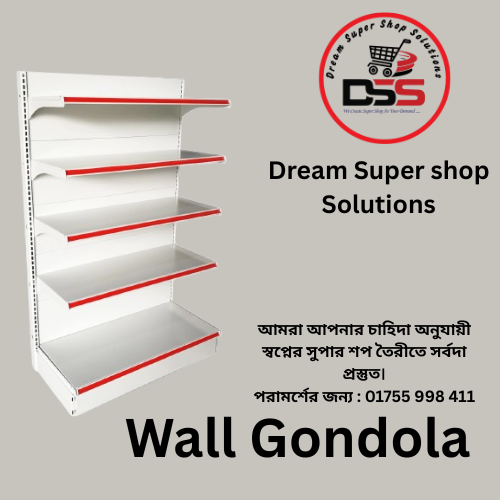
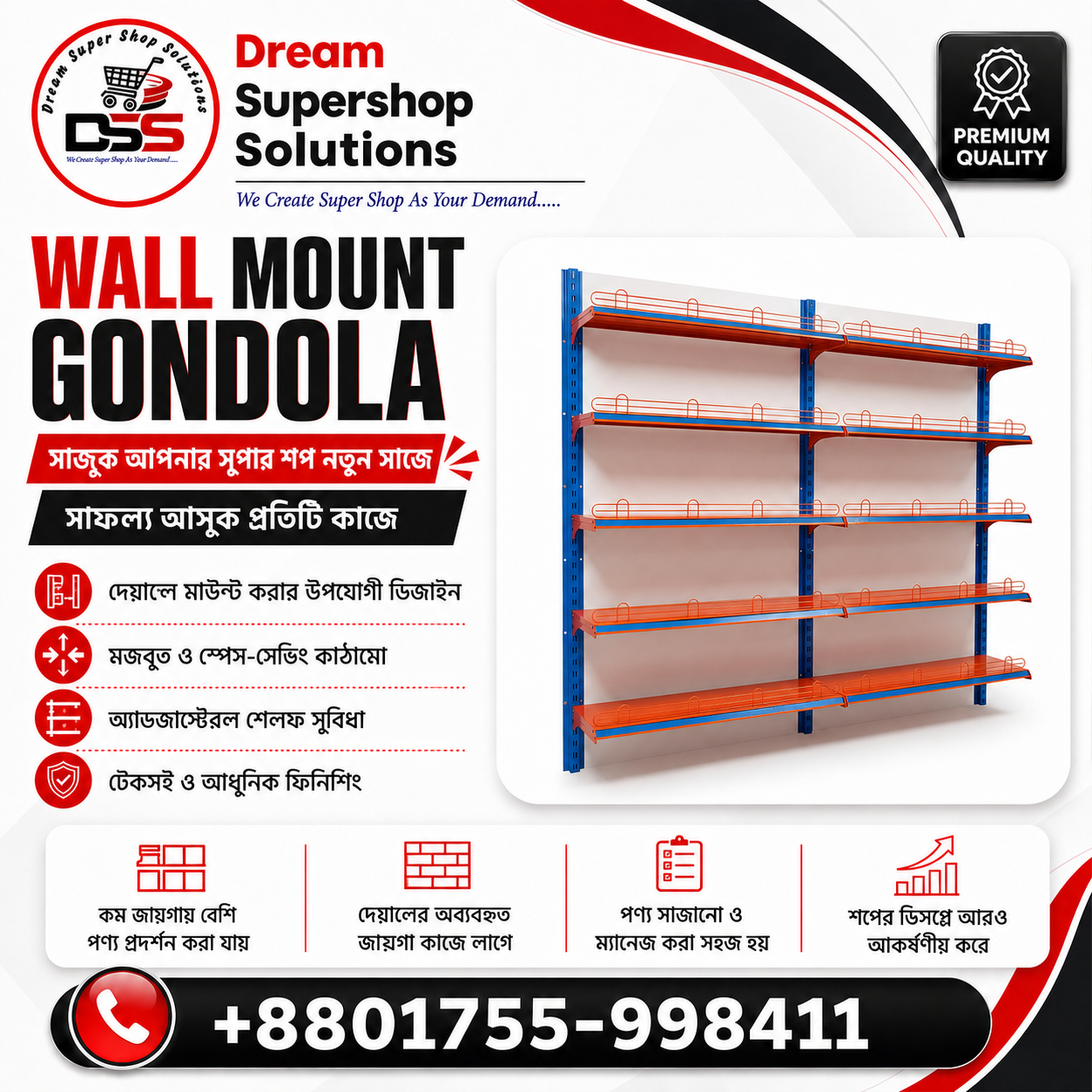
Wall Mount Gondola Display Rack
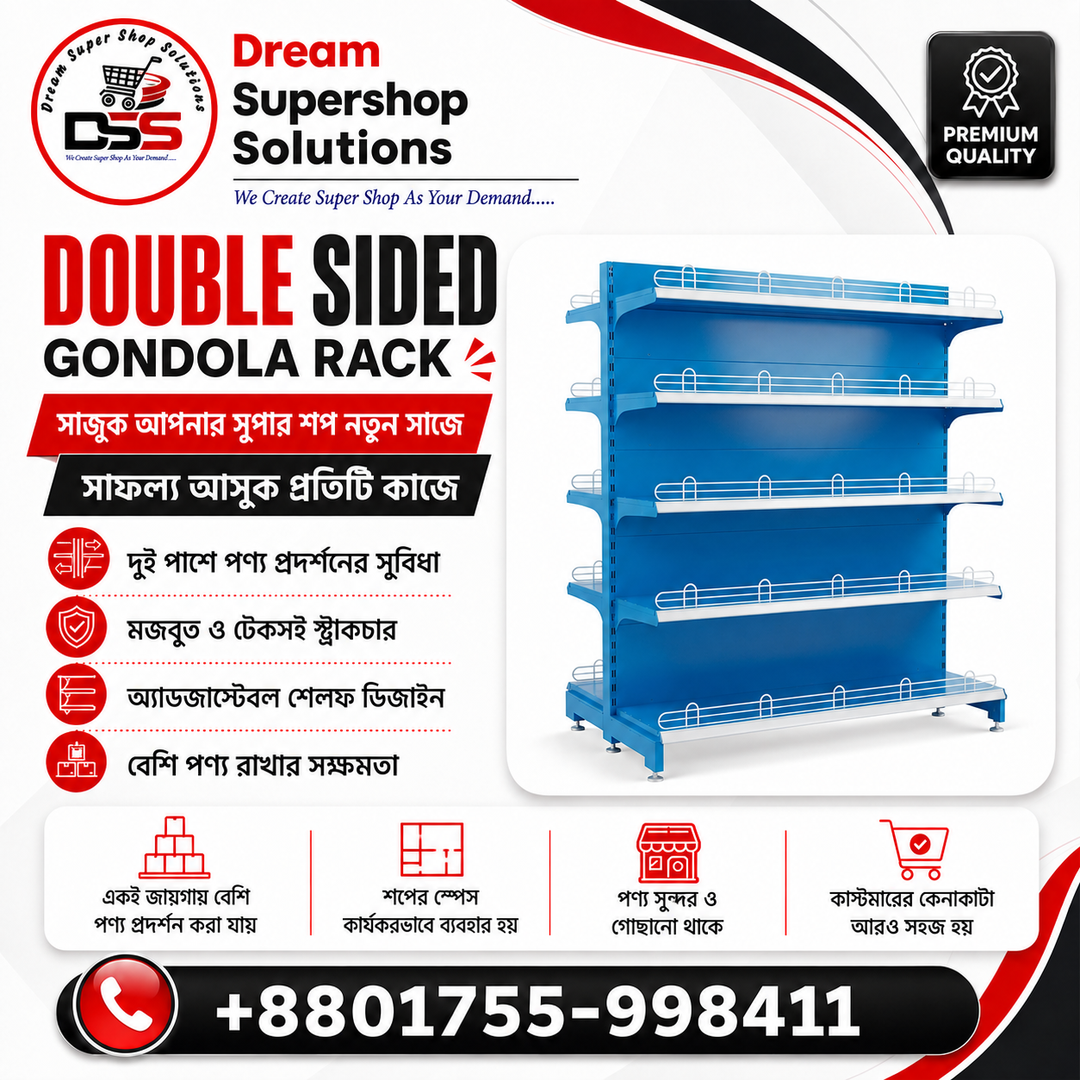
Double Sided Gondola Display Rack
Supershop Shopping Trolley (SS- Imported)
⚖️ Product Comparison
Choosing the right shopping carrier depends on several factors, including store size, average purchase volume, aisle width, customer requirements, trolley storage space, checkout layout, and operating budget.
A Supermarket Shopping Trolley can be compared with hand baskets, basket trolleys, platform carts, flatbed retail carts, and locally manufactured shopping carts. Each option has different features, capacity, mobility, and space requirements.
Shopping Trolley vs. Hand Basket
A Shopping Trolley uses wheels and typically provides a larger carrying basket, making it suitable for customers purchasing multiple or heavier items within the approved load capacity. A Hand Basket is carried manually and is generally suitable for quick shopping trips involving a smaller number of products.
A shopping trolley can reduce the need to carry products by hand and support larger shopping volumes. However, it requires suitable aisle clearance, designated storage space, wheel maintenance, and an appropriate trolley-return system.
A hand basket is generally easier to store, distribute, and manage in a retail environment. Its main limitation is its smaller carrying capacity, as customers must support the weight of the products while carrying it.
Key Differences
-
Mobility: Shopping trolleys use wheels, while hand baskets must be carried manually.
-
Carrying Capacity: Trolleys generally provide greater capacity for larger shopping volumes.
-
Customer Effort: Trolleys reduce the need for customers to carry products by hand.
-
Space Requirements: Trolleys require suitable aisle width, turning space, and storage areas.
-
Storage: Hand baskets are generally easier to stack and store in compact spaces.
-
Maintenance: Shopping trolleys require periodic inspection and maintenance of wheels, handles, baskets, and frames.
-
Shopping Purpose: Hand baskets are suitable for quick shopping trips and smaller purchases, while trolleys are suitable for larger shopping volumes.
-
Store Management: Trolleys may require designated collection and return areas to maintain an organised store environment.
Both shopping trolleys and hand baskets can be useful in the same retail store. Shopping trolleys are suitable for customers purchasing larger quantities of products, while hand baskets provide a convenient option for smaller shopping trips.
The appropriate combination should be selected according to customer shopping behaviour, store layout, available storage space, and operational requirements.
Shopping Trolley vs. Basket Trolley
A Basket Trolley typically combines a removable plastic basket with a compact wheeled frame. It is generally smaller and more lightweight than a full-size wire shopping trolley.
Basket trolleys are suitable for mini-marts, pharmacies, cosmetics stores, convenience shops, and other retail businesses with limited floor space. They require less aisle clearance and storage space compared to larger shopping trolleys.
A Full-Size Shopping Trolley offers greater carrying capacity and is more suitable for supermarkets, hypermarkets, large grocery stores, and retail environments where customers purchase multiple products.
Selection Guidance: A basket trolley may be suitable for compact retail stores and smaller shopping trips, while a full-size supermarket shopping trolley may be more appropriate for larger stores and higher-volume purchases.
Shopping Trolley vs. Platform Cart
A Shopping Trolley features a basket designed to contain and transport customers’ merchandise during shopping. In contrast, a Platform Cart provides a flat loading surface and is generally more suitable for transporting large boxes, bulk goods, or materials during staff operations.
Platform carts may support different load requirements depending on their design. However, loose products may fall from the platform unless they are properly boxed, secured, or arranged. They may also be less suitable for regular customer grocery shopping.
Selection Guidance: Use a shopping trolley for customer purchases and a platform cart for staff operations, stock movement, bulky packaged products, and internal transportation tasks.
Shopping Trolley vs. Flatbed Retail Cart
A Flatbed Retail Cart generally includes a low platform and a push handle. It is commonly used in furniture stores, hardware shops, wholesale outlets, and warehouse-style retail environments.
A Wire Basket Shopping Trolley provides better containment for smaller products, groceries, bottles, and packaged merchandise. A flatbed cart may be more practical for transporting large cartons, oversized packages, and bulky products.
Selection Guidance: A basket trolley may be suitable for supermarkets and grocery stores, while a flatbed retail cart may be more appropriate for businesses that handle larger boxed or bulky merchandise.
Imported Japanese Trolley vs. New Locally Manufactured Trolley
An Imported Japanese Shopping Trolley may feature established commercial retail construction and practical design. However, the age, condition, specifications, and availability of replacement parts may vary between imported batches.
A New Locally Manufactured Shopping Trolley may provide greater flexibility in customisation, confirmed production condition, and potentially easier access to replacement parts. Product quality depends on the manufacturer’s materials, construction methods, wheel quality, finishing, and quality-control standards.
An imported trolley may offer practical value when its frame, basket, handle, and wheels are in suitable condition. Buyers should inspect the actual units and verify their specifications rather than making a purchasing decision based solely on the product’s origin.
Selection Guidance: An imported trolley may be suitable when the available units are in good condition and meet the store’s requirements. A new locally manufactured trolley may be more appropriate when specific dimensions, confirmed new condition, or customised features are required.
Main Advantages of Imported Japanese Shopping Trolleys
Imported Japanese Shopping Trolleys may offer the following advantages, depending on the model, age, and condition:
-
Suitable for Commercial Retail Use
-
Practical Customer-Friendly Design
-
Metal Basket Construction
-
Smooth Movement with Proper Maintenance
-
Nesting Capability for Efficient Storage
-
Suitable for Larger Shopping Trips
-
Supports Customer Convenience
-
Suitable for Supermarkets and Large Retail Stores
-
Reusable Commercial Equipment
-
Potentially Cost-Effective Depending on Condition
The actual benefits depend on the trolley’s construction, maintenance history, wheel condition, basket quality, available accessories, and intended retail application.
Possible Disadvantages of Imported Japanese Shopping Trolleys
Before purchasing imported shopping trolleys, retailers should consider the following potential limitations:
-
Specifications may vary between imported batches.
-
Used units may have signs of wear or cosmetic damage.
-
Wheel and caster conditions may differ between individual trolleys.
-
Replacement parts may require model-specific matching.
-
Basket coating and metal surfaces should be inspected for damage or corrosion.
-
Availability of imported models may be limited.
-
Transportation and delivery costs may affect the total purchase price.
-
Large trolleys require sufficient aisle and turning space.
-
Staff members must manage trolley collection, return, and storage.
-
The condition of each trolley should be checked before confirming a bulk purchase.
A proper inspection and specification review can help retailers identify potential maintenance, operational, and storage requirements before purchase.
Buying Guide for Imported Japanese Shopping Trolleys
Before purchasing a Supershop Shopping Trolley Imported from Japan, retailers should confirm the following product, operational, and delivery details:
Product Specifications
-
Basket Capacity
-
Overall Dimensions
-
Trolley Weight
-
Frame Alignment
-
Basket Condition
-
Handle Condition
-
Wheel Movement
-
Caster Rotation
-
Nesting Compatibility
-
Rust or Coating Condition
-
Child-Seat Availability
-
Model and Design Specifications
Quantity and Maintenance
-
Total Quantity Available
-
Condition of Each Unit
-
Spare-Part Availability
-
Replacement Wheel Options
-
Maintenance Requirements
-
Warranty or Service Terms
-
Availability of Sample Inspection
Store and Operational Requirements
-
Store Aisle Width
-
Trolley Storage Area
-
Checkout-Lane Clearance
-
Customer Circulation Space
-
Average Customer Purchase Volume
-
Floor Surface and Operating Conditions
-
Required Trolley Quantity
Delivery and Cost Considerations
-
Delivery Location
-
Transportation Cost
-
Loading and Unloading Requirements
-
Delivery Schedule
-
Applicable Service Terms
-
Total Purchase Cost
Retailers should request current product photographs, videos, and model-specific specifications before confirming an order. Where possible, inspect a sample trolley to evaluate its frame, basket, handle, wheels, nesting function, and overall condition.
For bulk purchases, comparing the actual condition of available units with the store’s operational requirements can help businesses select suitable Imported Japanese Shopping Trolleys for their retail environment.
🧼 Maintenance Guide
Proper maintenance helps keep Shopping Trolleys clean, easy to manoeuvre, safe to use, and visually suitable for customers. Regular cleaning, inspection, and timely repairs can help extend equipment usability and support a better shopping experience.
Cleaning
Remove loose dirt, packaging materials, paper, receipts, food residue, and other waste from the trolley basket regularly.
Clean the basket, frame, handle, lower structure, and wheels using a suitable mild cleaning solution compatible with the trolley’s materials and finish.
Avoid strongly corrosive chemicals, abrasive cleaners, and unsuitable cleaning products that may damage metal coatings, plastic components, handles, or wheel materials.
After wet cleaning, dry the trolley thoroughly. Pay particular attention to joints, wheel assemblies, lower frames, and areas where water may collect.
Retailers should establish a routine cleaning schedule based on customer traffic, store conditions, and the frequency of trolley usage.
Rust Prevention
Inspect the metal frame and basket regularly for chipped coating, scratches, exposed metal, and early signs of corrosion.
Avoid storing trolleys in standing water, uncovered outdoor areas, wet loading zones, or locations exposed to prolonged rain and moisture.
Dry wet trolleys promptly and repair damaged protective coatings using an appropriate method suitable for the material and finish.
Imported used trolleys may require additional inspection because their previous usage, maintenance history, and storage conditions may vary between units.
Weight Capacity
The approved load capacity should be confirmed for the specific trolley model before use.
Do not overload the basket or arrange heavy products in a way that creates an imbalance. Excessive or uneven loading may affect:
-
Wheel Performance
-
Frame Alignment
-
Basket Joints
-
Handle Control
-
Turning Ability
-
Stopping and Control
-
Trolley Stability
-
Customer Safety
Products should remain inside the basket or designated lower section. Items should not extend dangerously beyond the trolley edges or interfere with customer movement.
Wheel Maintenance
Caster wheels are among the most important components of a shopping trolley. Inspect them regularly for:
-
Hair and Thread Entanglement
-
Plastic Wrapping
-
String or Other Trapped Materials
-
Dirt Buildup
-
Flat Spots
-
Cracks
-
Loose Fittings
-
Bearing Noise
-
Restricted Rotation
-
Uneven Movement
-
Pulling to One Side
Remove trapped materials and clean wheel assemblies regularly. Damaged or excessively worn wheels should be replaced with compatible components suitable for the specific trolley model.
Safety
Do not allow customers or children to stand inside the shopping trolley basket.
A child should only use a designated child seat when the specific trolley model includes one and the seat is in safe and serviceable condition. Follow the manufacturer’s child-seat instructions and weight limitations.
Customers should not ride on the lower frame, hang from the trolley, or push it at excessive speed.
Damaged or unstable trolleys should be removed from customer use until they have been properly inspected and repaired.
Staff should keep trolley bays organised so that loose trolleys do not roll into entrances, parking areas, roads, ramps, or customer pathways.
Routine Inspection
Inspect each trolley regularly for the following conditions:
-
Bent or Deformed Baskets
-
Loose Frames
-
Damaged Handles
-
Sharp Wire Edges
-
Broken Welds
-
Rust or Corrosion
-
Wheel Damage
-
Excessive Noise
-
Poor Steering
-
Unstable Movement
-
Damaged Child Seats
-
Missing Protective Components
-
Nesting Problems
-
Product Residue
-
Loose Fittings
High-traffic retail stores should inspect trolleys more frequently because repeated use, collisions, and heavy loading may accelerate component wear.
Any trolley showing significant damage, instability, or unsafe movement should be removed from service until the necessary inspection and repair have been completed.
Long-Term Care
Maintain a maintenance record for each trolley batch where practical. Record repaired wheels, replaced handles, frame repairs, coating maintenance, and removed units.
Use compatible spare parts whenever possible. Replacement components should be suitable for the trolley’s model, dimensions, and construction.
Avoid uncontrolled welding, cutting, drilling, or structural modifications. Repairs should not create sharp edges, weaken the frame, interfere with wheel movement, or affect trolley stability.
Retire any trolley that cannot be restored to a safe and practical operating condition.
Storage
Create a designated trolley bay near the store entrance or another controlled location that supports convenient collection and return.
Trolleys should be nested neatly instead of being left across customer walkways, entrances, or checkout areas.
Where outdoor storage is unavoidable, use a covered trolley shelter to protect the carts from rain, direct weather exposure, and prolonged moisture.
The storage location should not obstruct:
-
Store Entrances
-
Emergency Exits
-
Parking Traffic
-
Ramps
-
Accessibility Routes
-
Customer Walkways
-
Checkout Areas
Staff should regularly organise the trolley storage area and prevent unattended carts from rolling away.
Best Practices
-
Clean shopping trolleys regularly.
-
Inspect wheels and casters frequently.
-
Remove damaged units from customer use.
-
Store trolleys under suitable cover where possible.
-
Avoid exceeding the approved load capacity.
-
Keep trolley bays organised and accessible.
-
Train staff in safe trolley collection and storage.
-
Prevent trolleys from rolling unattended.
-
Use compatible replacement parts.
-
Repair or remove trolleys with sharp edges immediately.
-
Keep child seats clean and in good condition.
-
Check handles and fittings for looseness.
-
Remove waste and residue from baskets.
-
Review trolley quantity during peak shopping periods.
-
Maintain sufficient clearance around checkout areas.
-
Inspect trolleys after collisions or improper use.
-
Maintain clear customer pathways and emergency access routes.
Consistent cleaning, routine inspection, proper storage, and timely maintenance can help retailers maintain safer, cleaner, and more practical Supershop Shopping Trolleys for everyday customer use.
🔧 Installation Guide
For your convenience and peace of mind, our experienced technical team provides professional installation and setup services at your location whenever required.
For small orders or simple installations where an on-site visit is not necessary, our team provides step-by-step assistance through video calls or video instructions, ensuring a smooth and hassle-free setup.
Our goal is to ensure every installation is completed correctly, efficiently, and with minimal inconvenience to our customers.
🏬 Industry Use Cases
Supershop Shopping Trolleys are used in various retail environments to support customer convenience, product transportation, and organised store operations. The appropriate trolley type depends on store size, product categories, customer shopping volume, available floor space, and approved load capacity.
Supermarkets
Supermarkets can provide full-size shopping trolleys for customers purchasing groceries, beverages, toiletries, household products, and larger quantities of merchandise.
Shopping trolleys help customers move products conveniently between departments and transport their purchases to checkout counters.
Supershops
Supershops can use imported Japanese shopping trolleys to support customer convenience and provide a more complete retail shopping environment.
A designated Trolley Bay near the entrance can help keep carts organised and make them easily accessible to customers.
Hypermarkets
Hypermarkets may require larger shopping trolleys because customers often purchase products from multiple departments, including food, household goods, fashion, electronics, and lifestyle products.
The store layout should provide sufficient aisle width, turning space, trolley storage areas, and suitable checkout-lane clearance.
Grocery Stores
Large grocery stores can provide shopping trolleys for customers purchasing rice, cooking oil, beverages, vegetables, packaged food, and household essentials.
Shopping trolleys can reduce the need to carry multiple hand baskets and support the transportation of larger shopping loads within the approved capacity.
Department Stores
Department stores can use shopping trolleys for carrying homeware, packaged clothing, personal care products, toys, and other household merchandise.
The trolley design and store layout should be compatible with available aisles, lifts, escalators, display fixtures, and checkout areas.
Wholesale Retail Outlets
Cash-and-carry businesses and wholesale retail outlets may use suitable high-capacity shopping trolleys for customers purchasing products in larger quantities.
Retailers should ensure that products remain within the trolley’s approved load capacity and that heavy items are distributed safely.
Large Pharmacies
Large pharmacies with baby-care, personal-care, household, beauty, and wellness sections can provide compact or standard shopping trolleys according to their store layout and customer requirements.
Trolleys can help customers carry multiple boxed, bottled, and packaged products more conveniently.
Homeware Stores
Homeware retailers can use shopping trolleys for kitchen accessories, cleaning products, storage items, decorative goods, and small household equipment.
Large or unusually shaped merchandise may require a suitable platform cart or another specialised transportation solution.
Electronics Retail Stores
Large electronics retailers can use shopping trolleys for accessories, boxed devices, cables, and smaller appliances.
Heavy or oversized products should only be transported when they remain within the trolley’s approved load capacity and dimensional limitations.
Fashion and Lifestyle Stores
Large fashion and lifestyle retailers may provide shopping trolleys for packaged clothing, footwear boxes, household textiles, bags, and accessories.
The trolley design and movement area should be suitable for the store’s display fixtures and should not damage clothing, products, or merchandising structures.
Pet Supply Stores
Pet supply retailers can use shopping trolleys for carrying pet food packages, litter products, toys, grooming supplies, and feeding accessories.
Heavy bags and large packages should be loaded carefully and positioned to maintain balance and safe trolley movement.
Book and Stationery Stores
Large bookstores and office-supply retailers can provide shopping trolleys for books, files, paper, notebooks, educational materials, and stationery products.
Because books, paper, and files can become heavy when loaded in large quantities, retailers should monitor the approved load capacity and distribute products evenly.
Hardware Retail Stores
Large hardware stores may use suitable shopping trolleys for packaged tools, paint accessories, electrical items, household repair products, and other small or medium-sized merchandise.
Industrial equipment, oversized materials, and unusually heavy products may require specialised carts or platform trolleys.
Shopping Centres
Shopping centres with supermarket, department-store, or other retail operations can provide designated trolley bays near store entrances, parking access points, and customer-service areas where appropriate.
Trolley storage and collection points should be organised without obstructing pedestrian pathways, emergency access routes, ramps, or vehicle movement.
New Supershop Projects
New retail businesses should consider shopping trolley requirements during the initial store-design and planning stage.
Planning may include:
-
Required Trolley Quantity
-
Trolley Storage Areas
-
Entrance and Exit Dimensions
-
Aisle Clearance
-
Customer Circulation Space
-
Ramp Access
-
Checkout-Lane Width
-
Turning Space
-
Parking and Loading Access
-
Trolley Collection Points
-
Store Floor Conditions
-
Expected Customer Shopping Volume
Early planning can help businesses coordinate shopping trolleys with gondola racks, checkout counters, promotional displays, entrances, and other retail equipment.
Dream Supershop Solutions can support retail equipment planning by reviewing store dimensions, customer movement requirements, trolley quantities, and related supershop equipment needs according to the proposed retail layout.
Return & Refund Policy
Return Refund Policy Editor
FAQ
Reviews
No reviews yet. Be the first to review this product.
Write a Review
Recommended Products
Show All
_1753463466363_61fx3p.png)